Back to School Checklist: Practical Prep for Real Life
Getting ready for back to school isn’t just about sharpening pencils or labeling lunchboxes—it’s a logistical pivot point. For adults juggling careers, caregiving, creative projects, or small businesses, the start of the academic year often signals a shift in household rhythm, time allocation, and mental bandwidth. A well-structured Back to School Checklist helps anchor that transition—not as a rigid to-do list, but as a flexible framework aligned with how people actually live and work today.
Why This Moment Demands More Than a Supply List
Modern back-to-school prep reflects broader lifestyle realities: hybrid schedules, remote learning carryovers, rising costs, and heightened awareness of neurodiversity and individual learning needs. Parents aren’t just shopping for notebooks—they’re coordinating transportation logistics, reviewing IEP or 504 plans, evaluating screen-time boundaries, and aligning family calendars across multiple time zones or work shifts. Educators are adapting lesson plans for varied readiness levels; freelancers and entrepreneurs may be adjusting client deadlines around school drop-offs; homeschooling families are sourcing curricula and co-op opportunities. In this context, a Back to School Checklist serves less as a static inventory and more as a decision-support tool—helping users prioritize, delegate, and anticipate friction points before they escalate.
How the Checklist Evolved—From Paper to Personalized Workflow
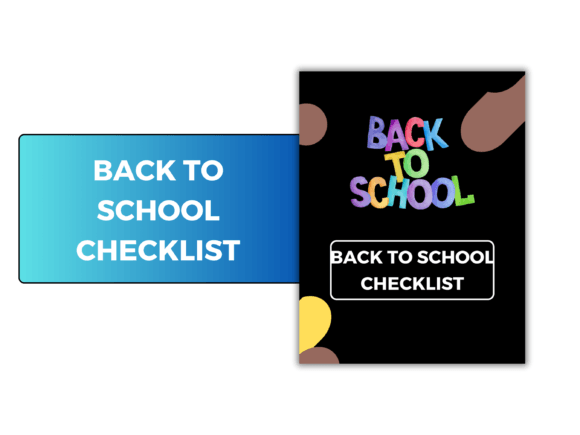
Fifteen years ago, “back to school” meant a single trip to the office supply store and a photocopied list from the PTA. Today, it’s layered: digital consent forms, app-based communication platforms (like ClassDojo or Seesaw), QR-coded library cards, and school-specific LMS logins. The printable Back to School Checklist—five pages, cleanly organized—meets this complexity without overwhelming. It’s designed to be annotated, shared, and adapted: one parent might highlight the “health & wellness” section for allergy action plans; another uses the “tech readiness” page to audit device updates and password managers; a teacher might repurpose the “classroom setup” segment for their own professional development goals.
This evolution mirrors wider trends in productivity: people increasingly value *modular* tools over monolithic systems. A checklist isn’t meant to replace project management software—but it *integrates* with it. You might scan the printed checklist into Notion, tag items by deadline (“buy uniforms by Aug 10”), assign tasks to partners or older kids, or link digital resources (e.g., “school lunch payment portal → [link]”). Its utility lies in its portability and clarity—not perfection.
What’s Inside—and Why Each Section Matters
The five-page printable file balances breadth with intentionality. Here’s how each part supports real-world execution:
- Academic Readiness: Covers grade-specific supply lists (with notes on eco-friendly alternatives and bulk-buy options), textbook rentals vs. digital access codes, and summer skill review prompts—not as busywork, but as low-stakes ways to rebuild focus stamina before Day One.
- Logistics & Scheduling: Includes bus route verification, after-school activity sign-up deadlines, and shared calendar sync tips. Especially useful for dual-income households or caregivers managing multiple students across different schools.
- Health & Wellness: Goes beyond immunization records to include vision/hearing screening windows, mental health resource contacts, hydration/snack planning, and sleep routine reset strategies—recognizing that cognitive readiness starts with physiological stability.
- Tech & Digital Setup: Addresses device charging stations, parental controls refresh, Wi-Fi troubleshooting steps, and student email account activation. Critical now that even elementary schools use digital portfolios and interactive homework platforms.
- Emotional & Social Prep: Offers conversation starters for anxiety or excitement, peer connection ideas (e.g., “find one classmate to walk in with”), and a simple “first-week reflection” prompt for adults to revisit mid-August—because emotional readiness is as trainable as any academic skill.
Adapting the Checklist Beyond Traditional Schooling
Not every user fits the “parent of K–12 student” mold—and that’s intentional. Freelancers launching an online course for teens might use the “Academic Readiness” section to benchmark student expectations. Small business owners hiring high school interns can adapt the “Logistics & Scheduling” page to map onboarding timelines. Educators designing PD workshops reference the “Emotional & Social Prep” prompts to build facilitator empathy. Even adult learners returning to certification programs find value in the “Tech & Digital Setup” guidance when navigating new LMS platforms or virtual classroom norms.
This flexibility reflects how learning ecosystems have blurred. Homeschool collectives, microschools, apprenticeship programs, and community college pathways all require structured transitions—just with different variables. The Back to School Checklist doesn’t assume uniformity; it invites customization. A note in the margin—“Adjust for hybrid days” or “Add co-op schedule”—isn’t an afterthought. It’s built into the design philosophy.
Realistic Timeframes—and Where to Start
Don’t wait until the last week of August. Begin in early July with just two actions: review your school’s official calendar and open the checklist file. That’s it. No pressure to complete anything—just glance at deadlines, flag three high-effort items (e.g., “order custom PE uniforms,” “schedule dental checkup,” “test home internet speed”), and block 25 minutes on your calendar next Tuesday to tackle one. Momentum builds through micro-commitments, not marathon sessions.
For teams—whether teaching staff, PTA volunteers, or small business HR leads—the checklist works as a collaborative baseline. Share a version with editable fields, use color-coding for ownership, or convert sections into Asana tasks. The goal isn’t uniform execution; it’s shared awareness and reduced misalignment.
Why Print Still Has Purpose
In a world of notifications and tabs, the physical Back to School Checklist serves a quiet but powerful function: it creates a designated space for attention. Taping a page to the fridge, highlighting items during coffee time, or letting a child circle what they’ll pack themselves—these tactile interactions reinforce agency and reduce cognitive load. Digital tools excel at reminders and automation; paper excels at reflection and co-creation. The five-page format ensures depth without sprawl—no scrolling, no toggling, no “where did I leave that tab?”
A Tool That Grows With You
This isn’t a one-time download. Revisit the Back to School Checklist in January for mid-year resets, in May for summer learning continuity, or even in September of next year—with last year’s annotations as data. Did “label all clothing” take 45 minutes or 3 hours? Did the “snack rotation plan” actually reduce afternoon meltdowns? Those insights become your personalized improvement loop.
At its core, the Back to School Checklist acknowledges something fundamental: preparation isn’t about control. It’s about creating conditions where curiosity, resilience, and connection can take root—even when the first week includes spilled lunches, forgotten permission slips, and tech glitches. It’s practical. It’s adaptable. And most importantly, it meets people where they are: professionals recalibrating work-life flow, creators building sustainable routines, educators refining their craft, and caregivers doing the quiet, constant work of holding space for growth.
Start small. Adjust freely. Trust the process—not because everything will go smoothly, but because you’ve built in room to respond, revise, and move forward with grounded intention.